Why isn't my brand showing up in AI search results?
Most businesses are invisible to ChatGPT, Perplexity, and Claude. The fix starts with understanding how AI systems decide which brands are worth mentioning.
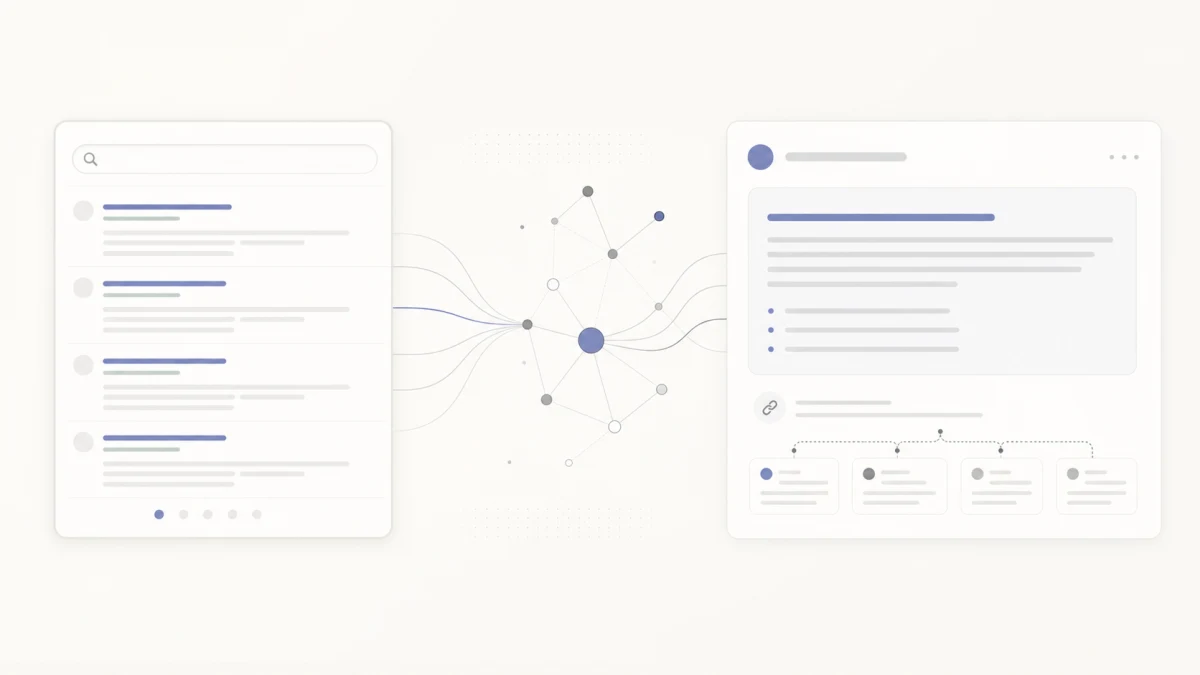
Visibility is an evidence graph, not a ranked link.
AI systems connect mentions, citations, entities, and source quality before deciding whether your brand belongs in the answer.
Common causes
The old search model does not map cleanly to AI answers.
Online visibility and a strong digital footprint still matter. The problem is that AI search works differently from Google, and most teams are still optimizing for the old rules.
Old search
Ranking pages
AI search
Synthesizing answers
Old model
Google rewarded pages, keywords, links, and rankings.
For twenty years, SEO meant optimizing content for search engine algorithms, building backlinks, and perfecting on-page elements. Tools like Google Search Console and Google Analytics are still useful, but they have limitations when measuring visibility in AI search results.
New model
AI search generates answers from trusted signals.
Instead of showing ranked links, AI search engines synthesize information from multiple sources. They rely on training data, indexed pages, AI crawlers, structured data, trusted local profiles, and what authoritative sources have said across the web.
AI discovery is already mainstream
Over half of searches now include AI-driven features like Google AI Overviews. Research shows that 73% of brands are never mentioned by AI systems, creating a major gap in AI search visibility.
AI needs repeated trusted signals
Your brand might be great. But if AI models have not encountered you enough, if trusted sources do not cite you, or if your content is not easy to pull into answers, you will not appear.
Bad brand data creates distrust
Inaccurate or outdated brand information is a primary cause for exclusion. AI uses mentions on third-party sites to verify authority, and inconsistent brand data can make AI distrust what it finds.
Why brands get ignored
There is no stable page one. AI visibility is built from authority, relevance, citations, and external signals.
01
Different prompts, different answers
AI tools can produce different brand recommendations more than 99% of the time when given the same prompt. Testing the same query across Google AI Overviews, ChatGPT, Perplexity, and Claude reveals that different rules apply.
02
Mentions and citations matter
Brand mentions, external signals like backlinks and reviews, and citations from industry publications are critical for improving your brand's AI search presence.
03
Visibility changes fast
AI search visibility is dynamic. Studies show that Google AI Overviews changed nearly 60% of the domains it cited in just four weeks, so monitoring and adaptation matter.
Understanding AI answers
AI search engines do not just list web pages.
They generate direct, conversational answers. That means your brand has to be understandable, credible, and easy to cite across the sources AI systems trust.
AI answers are synthesized
ChatGPT, Perplexity, and Claude synthesize information from reputable websites, industry blogs, authoritative publications, indexed pages, and structured data. They focus on delivering the most relevant, context-aware response in a format users can digest quickly.
Structured authority wins
Structured data such as schema markup helps AI systems understand your content and increases the likelihood that your brand appears in AI-generated answers. Mentions from trusted sources and well-organized authoritative content make it easier for AI to pull your brand into responses.
How to fix it
The brands that show up are the ones that give AI systems clear, trusted reasons to mention them.
01
Get cited
AI needs sources. Be the source journalists, analysts, trusted blogs, and industry publications reference, especially on high-authority sites.
02
Write for AI attention
Front-load key points and pay attention to how AI describes your brand. Do not bury the answer in a 3,000-word ultimate guide that loses the AI's attention in the middle.
03
Build actual authority
Guest posts, podcast appearances, data releases, and original research all create the mentions and citations AI systems use to recognize authority. Recency matters too: 71% of ChatGPT citations come from content published in the last three years.
04
Create AI-friendly content
Use clear structure, conversational language, lists, tables, FAQs, and direct answers to common questions. Content that is easy to parse is easier for AI models to cite.
05
Optimize for AI tools
Use structured data and schema markup as a map for AI tools. Make generative engine optimization part of your AI search strategy, and optimize local signals when local AI results matter.
06
Track progress differently
Rank number matters less than presence. Monitor your brand's presence in AI overviews, citations, and AI mentions across different search platforms because results are volatile and less predictable.
The role of AI-generated content
AI-generated content is reshaping discovery. Quality alone is not enough.
Clarity beats keyword stuffing
AI search engines prioritize clarity, context, and authority. Your content should use clear headings, bullet points, and direct answers to common questions in your industry.
Schema helps AI understand you
FAQ, article, and local business schemas provide structured data that helps AI systems understand and display your content accurately in AI-powered search results.
The opportunity
Most businesses are still optimizing for Google while future customers are asking ChatGPT.
Figure it out first
That is your edge. The companies that figure this out first will be the ones AI recommends. As search engine results evolve to include both traditional and AI-powered search, brands need strategies that maintain visibility across all platforms.
Monitor how often AI search engines mention your brand
Find which competitors AI recommends instead of you
Adapt as AI algorithms and search behaviors evolve
Stop wondering why traffic dropped
The rest will keep wondering why their traffic dropped. SearchRank AI helps you track brand presence in AI overviews, AI mentions, citations, competitor recommendations, and visibility changes across AI search platforms.
Daily AI visibility monitoring across major platforms
AI readability analysis and content improvement signals
Backlink and citation opportunities from AI search results
Fix your AI visibility
Start showing up in AI search results.
Set up daily monitoring in under 5 minutes. Know exactly where your brand stands across every major AI search engine.